Docs Navigation
Beat The Market Long Term
What is Beat The Market Long Term?
Beat The Market Long Term is a systematic investment strategy that uses technical analysis to time entries and exits in leveraged ETFs (SPXL, UPRO, etc.). Here's how it works:
- Uses SPY's relationship to its long-term moving average as a market health indicator
- Enters leveraged positions (like UPRO) when conditions are favorable
- Exits to cash when market conditions deteriorate
- Automatically reinvests all profits to compound returns over time
Key Features:
- Rules-based approach eliminates emotional decision making
- Focuses on capturing major bull market moves while avoiding significant bear markets
- Built-in performance comparison to buy-and-hold SPY
- Customizable start date to test different market periods
- Real-time performance tracking and metrics
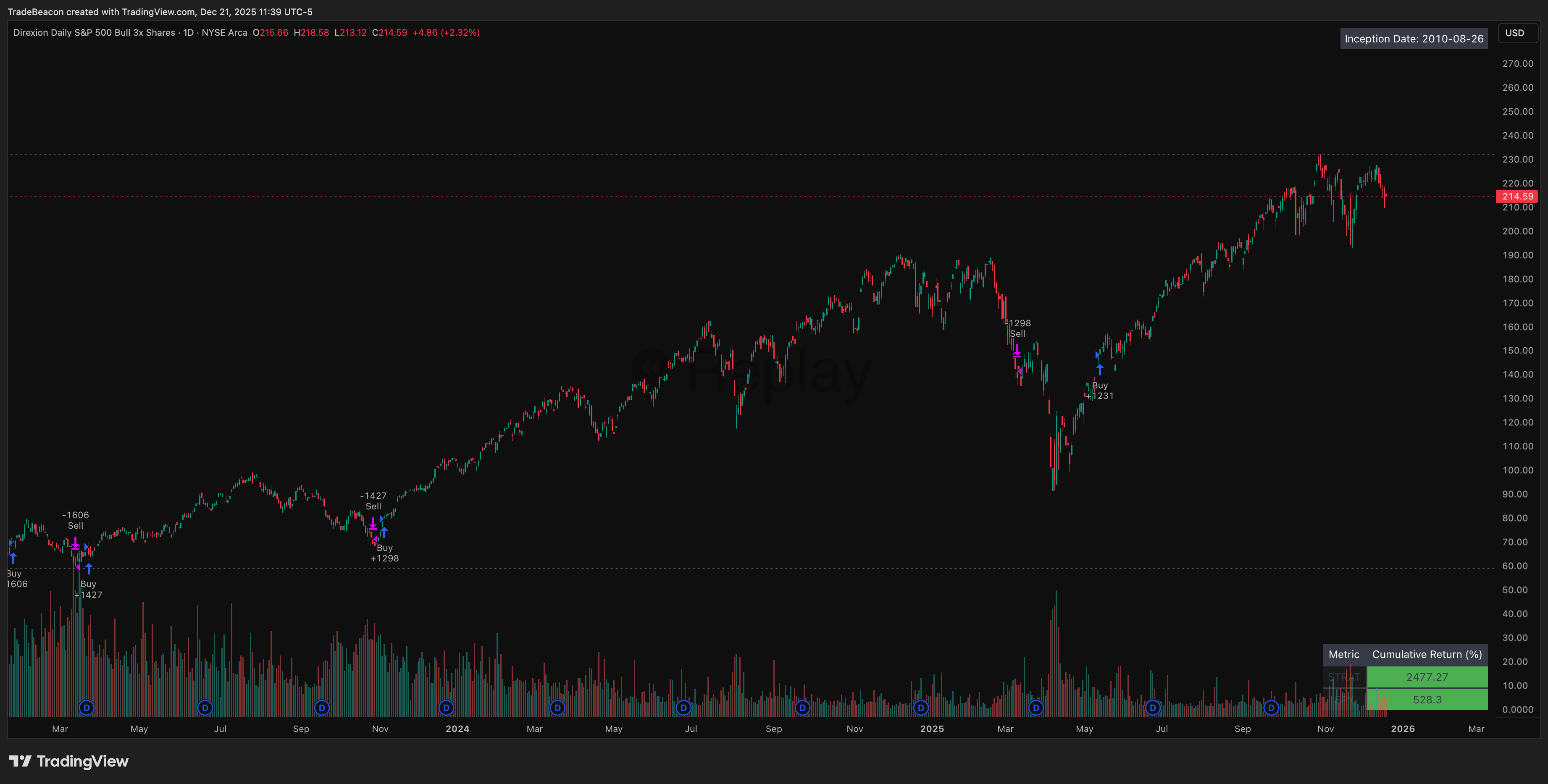
The Strategy Logic
The strategy is built around a simple but effective concept: market momentum and trend following.
The system uses SPY's long-term moving average as the foundation for decision making. This moving average acts as a dynamic support/resistance level that helps identify market regime changes.
Instead of using the moving average directly, the strategy creates percentage-based bands around it. This prevents whipsaws from minor fluctuations while ensuring signals occur during meaningful moves.
When SPY moves above the upper band, it signals strong bullish momentum. The strategy interprets this as an environment where leveraged long exposure is likely to be profitable.
When SPY falls below the lower band, it signals deteriorating market conditions. The strategy exits leveraged positions to preserve capital during potential downturns.
The strategy automatically calculates position sizes based on available capital, ensuring maximum exposure during favorable conditions.
Risk Management and Leverage
This strategy involves leveraged ETFs, so understanding the risks is crucial.
Leveraged ETFs like UPRO provide amplified exposure to market movements. While this can significantly enhance returns during bull markets, it also amplifies losses during bear markets.
Leveraged ETFs experience decay over time due to daily rebalancing, making them unsuitable for buy-and-hold strategies. This system's timing approach helps mitigate this decay by avoiding extended periods of unfavorable conditions.
The strategy's exit rules help avoid the worst drawdowns that would devastate a buy-and-hold leveraged position. By moving to cash during adverse conditions, it preserves capital for future opportunities.
Past performance doesn't guarantee future results. Market conditions change, and strategies that worked in certain periods may not work in others. This tool helps you understand how the approach would have performed historically.
Settings and Configuration

Key settings include:
- Start Date: Choose when to begin the backtest - this dramatically affects results depending on market conditions during your chosen period
- Initial Capital: Set your starting investment amount for realistic performance calculations
- Moving Average Period: The default uses a long-term moving average optimized for major trend identification
- Band Width: Percentage bands around the moving average that trigger entries and exits
Interpreting Results
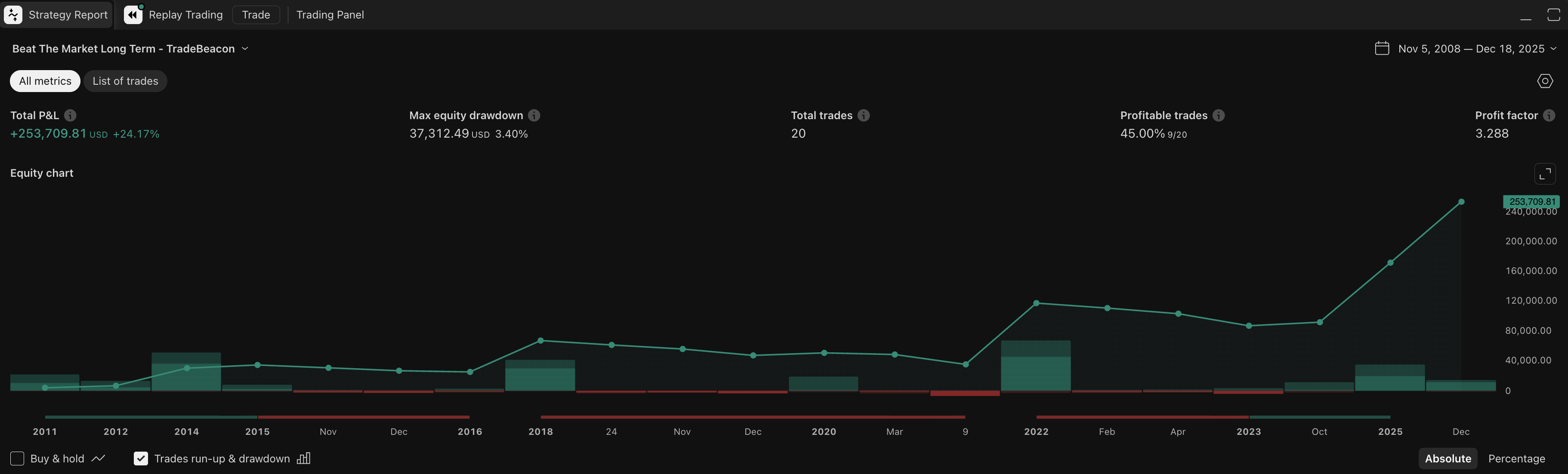
Understanding what the results mean is crucial for proper evaluation.
The table shows cumulative returns for both the strategy and SPY buy-and-hold from your chosen inception date. This allows direct comparison of risk-adjusted performance.
The strategy shows real-time comparison between:
- Your strategy returns
- SPY buy-and-hold returns
- Inception date for reference
- Cumulative return percentages for both approaches
Results vary dramatically based on your chosen time period:
- Bull market periods may show significant outperformance
- Bear market periods test the strategy's defensive capabilities
- Sideways markets may show underperformance due to whipsaws
Practical Implementation Considerations
If you're considering implementing this approach, here are critical factors to consider.
Execution Requirements:
- Consistent monitoring of market conditions
- Disciplined execution of entry/exit signals
- Understanding of leveraged ETF mechanics and risks
- Sufficient capital to handle volatility
Important Considerations:
- Transaction costs aren't included in backtests
- Leveraged ETF availability and terms change over time
- Tax implications of frequent trading vs buy-and-hold
- Psychological difficulty of executing systematic rules during market stress
Risk Assessment:
- Leveraged ETFs can lose significant value quickly
- Strategy may underperform during certain market conditions
- Requires comfort with systematic approach over market timing intuition
Alternative Approaches:
- Consider unleveraged versions using regular index funds
- Explore different moving average periods or band widths
- Research other systematic timing approaches
- Evaluate dollar-cost averaging as an alternative
This type of strategy may benefit from consultation with financial advisors who understand systematic approaches and leveraged instruments.
Common Mistakes and Warnings
- Overfitting to Past Data: Don't assume historical outperformance guarantees future success
- Ignoring Transaction Costs: Real-world implementation includes commissions, spreads, and taxes
- Emotional Override: Systematic strategies only work if you follow the rules consistently
- Leverage Misunderstanding: Leveraged ETFs carry significant risks that may not be apparent in backtests
- Cherry-Picking Periods: Testing only favorable time periods doesn't represent real-world performance
- Position Size Errors: Using more capital than you can afford to lose violates basic risk management
Conclusion
Beat The Market Long Term provides a systematic framework for evaluating trend-following strategies with leveraged instruments. While backtests can show impressive results during favorable periods, it's essential to understand the risks and limitations of any systematic approach.
The strategy demonstrates how technical analysis can be used for long-term portfolio management, but it requires careful consideration of your risk tolerance, investment timeline, and ability to execute systematic rules consistently.
Remember: this is an educational tool for understanding systematic strategies, not personalized investment advice. Always consult qualified professionals before implementing leveraged investment strategies.